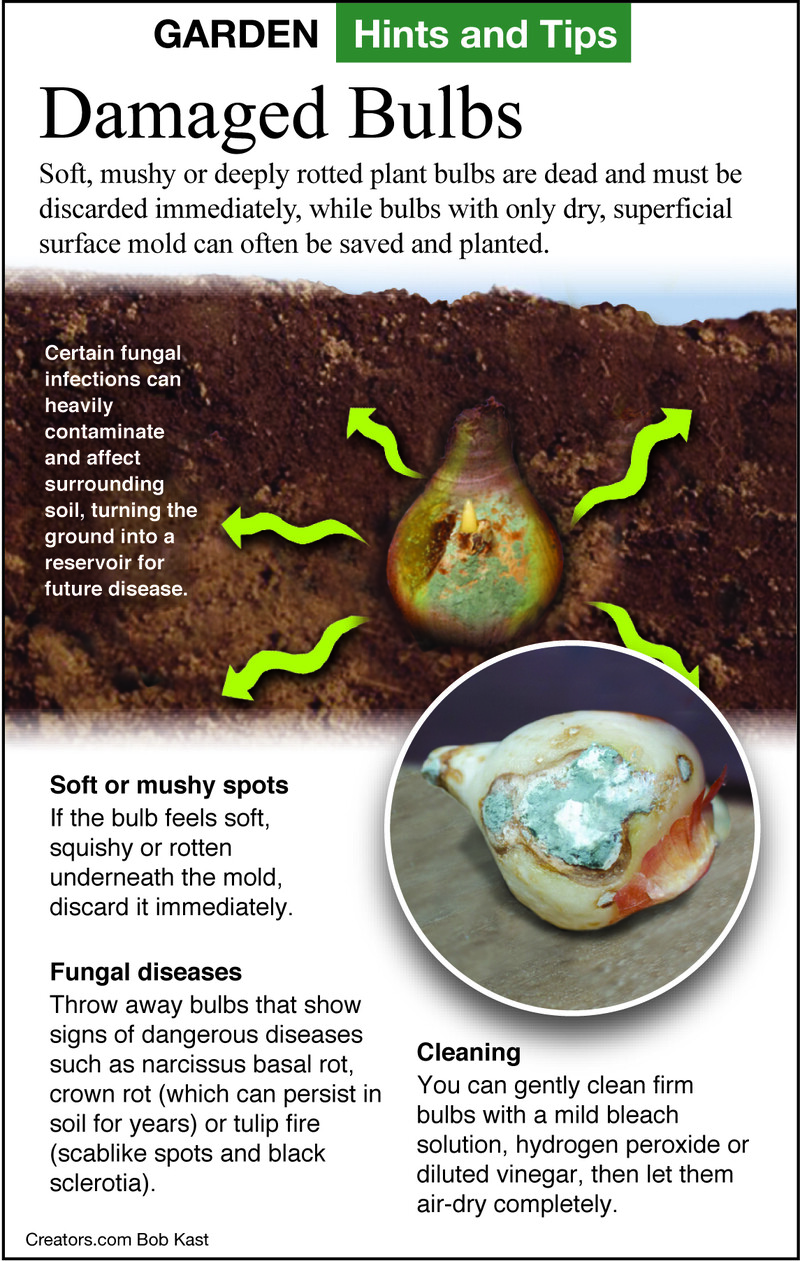
Q: I received some expensive hyacinth, tulip and other bulbs that came with blue and gray mold growing on some of them. I don't want to plant them if they are going to die, and I don't want to throw them away because they cost a lot of money. Is there something I can treat them with?
A: I have good news for you. This is a surface mold that does no harm. It just grows on the bulbs when there's a lot of humidity in the air. Just wipe them off with a wet paper towel and plant them. You can wet the towel with some rubbing alcohol first if you desire.
You are right to be concerned because there are several fungal diseases that affect bulbs. As they consume the bulb, the bulb will start to feel light for its size. If any of these bulbs feel lightweight, they should probably be tossed, since they may have more than one fungal problem.
Always buy the heaviest bulbs in the bin. Always look at every bulb for sticky areas, discolored liquids, sunken areas and mildew patches. Bulbs that have these signs and symptoms will not grow out of them but rather will infect your soil and the rest of your bulbs. If you dig up bulbs in your yard with these problems, dig up and discard 6 inches of soil around the old bulb's location. Be careful not to cut or otherwise damage the bulbs as you dig them up, because damaged bulbs easily get infected.
If you find a patch of bulbs with problems, soak the bulbs in a fungicide solution or use a fungicide powder to dust them and the infected soil. Do not replant bulbs in these areas for at least three years.
Q: I have some gladiolus bulbs that bloomed well this summer, and I want to save them until next year. What do I do with them?
A: Wait as long as you can after the flowers stop blooming to harvest the plants. You don't have to wait until there is going to be a frost, but if you do, don't let the bulbs freeze. The longer you let the bulbs grow, the more food they can store in the bulb.
The same advice can be used for begonia, caladium, calla lily, canna, dahlia and other summer-blooming plants. Even though some do not grow from bulbs, they are often lumped together as summer-blooming bulbs.
Dig them up before the roots are damaged by freezing weather. This can be after the first frost has killed the tops, because the roots are deeper in the soil and not damaged until the frost goes down into the soil.
Wash off the bulb, rhizome or root system. The easiest way to do this is to fill a bucket with water and just slosh them around while gently rubbing the mud off. Spraying them with a hose just splashes water back in your face.
Let them dry out for a day or two, and if desired, sprinkle a fungicide dust on them. Then place the bulbs or rhizomes into paper bags labeled with name, flower color, height and any other information. Place smaller bulbs such as gladioluses and begonias into egg cartons. This storage container works very well since it keeps the bulbs neatly stacked during storage. It keeps the bulbs separated, so if one gets a little fungus growth, it is slow to spread to the other bulbs. The containers are easy to label as well. Store them all in a cool, dry location until spring.
DIST. BY CREATORS.COM







View Comments